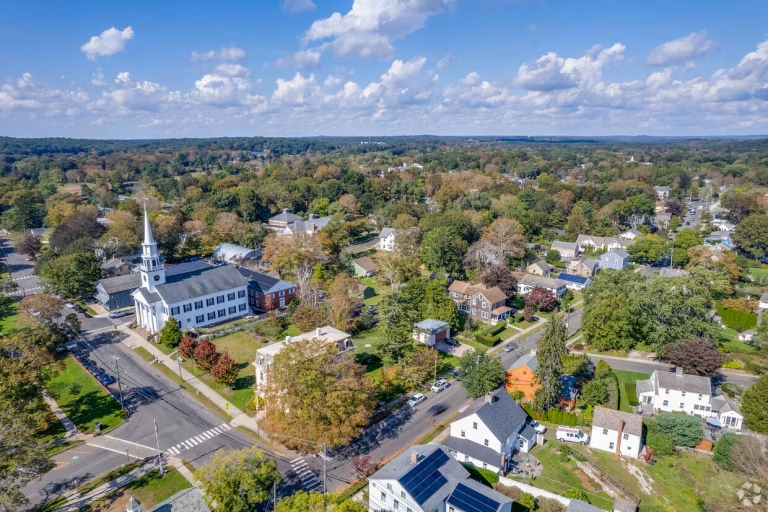
Moving to Milford, Connecticut: The Complete 2026 Guide to Living, Relocating, and Buying a Home in This CT Shoreline Gem
Looking at the bigger picture? See the Connecticut Shoreline Guide to compare all 24 CT shoreline towns from Greenwich to Mystic.
Thinking about moving to Milford, CT? You are not alone. Milford, Connecticut has quietly become one of the most searched coastal towns for buyers relocating to CT from New York City, Boston, New Jersey, and beyond. With 17 miles of Long Island Sound shoreline, a walkable historic downtown, top-rated public schools, and a Metro-North commute that puts you in Grand Central in about 90 minutes, living in Milford CT delivers the kind of balance that is increasingly hard to find anywhere else in Connecticut. If you are ready to start your search, you can browse current Milford homes for sale here.
This in-depth guide covers everything you need to know before relocating to Milford, Connecticut in 2026: cost of living, the best Milford neighborhoods, schools, the local job market, transportation, what it actually feels like to live here year-round, and the practical steps that make a smooth move. Whether you are upsizing from a Fairfield County rental, escaping the city for shoreline living, or returning to Connecticut to be closer to family, Milford CT has a strong case to make.
Introduction to Milford, Connecticut: A Coastal CT Town with Big-Heart Energy
Nestled along Connecticut’s scenic Long Island Sound shoreline, Milford is a charming coastal city in New Haven County that blends small-town warmth with urban convenience. Locals proudly call it “A Small City with a Big Heart,” and that nickname captures something real about Milford CT: it has the amenities of a city of 50,000, but the personality of a tight-knit beach town. Residents enjoy beautiful beaches, a historic downtown Green, exceptional restaurants, year-round community events, and an unusually welcoming culture for newcomers.
Milford, Connecticut is one of the most desirable places to live in southern CT, especially for families, retirees, remote professionals, and anyone relocating to Connecticut from New York City or other parts of New England. The town’s footprint stretches from Devon and the Housatonic River on the west to Woodmont and Walnut Beach on the east, with an extraordinary amount of public shoreline access for a town its size. If a coastal CT lifestyle is what brought you here, Milford should be very near the top of your list.
Why People Are Moving to Milford Connecticut in 2026
Over the past several years, moving to Milford CT has become one of the most common relocation stories on the Connecticut shoreline. The reasons are straightforward: Milford offers genuine coastal living at a price point that remains accessible compared to lower Fairfield County, while still delivering the schools, services, and commuter access buyers expect from a top CT town.
Top reasons people are moving to Milford, Connecticut:
- Affordable coastal housing compared to Greenwich, Westport, and Darien
- Easy Metro-North commute to Grand Central via the New Haven Line
- Excellent Milford public schools and very low violent crime
- 17 miles of Long Island Sound shoreline with public beaches and harbor access
- Vibrant downtown with restaurants, shops, and a weekly seasonal farmers market
- Strong remote-work fit with both train and highway flexibility
If those advantages line up with what you are looking for, the next logical step is to see what is currently for sale in Milford, CT. The Milford market moves quickly in spring and fall, and well-priced homes near the water or downtown rarely sit long.
Cost of Living in Milford, CT
The cost of living in Milford is moderate by Connecticut shoreline standards. Milford CT housing prices have appreciated meaningfully over the past few years, but they remain well below comparable coastal towns in lower Fairfield County. For buyers relocating to Connecticut, that gap is exactly the value Milford offers: real shoreline living without the Greenwich price tag.
| Expense Category | Average Cost | Notes |
| Median Home Price | $480,000 | Still affordable for a coastal CT town |
| Average Rent (1BR) | $1,700/month | Higher near downtown and the beach |
| Property Tax (Mill Rate) | 27.68 mills | Comparable to nearby New Haven County towns |
| Utilities | $160/month | Varies by season |
| Groceries | Slightly above national avg | Typical for coastal New England |
Milford strikes a sweet spot between affordability and quality of life, which is why it is so often the answer for buyers torn between New Haven and Fairfield County. For a current snapshot of pricing by neighborhood, explore the live Milford property search here.
Best Neighborhoods in Milford, Connecticut
Milford CT is bigger and more varied than first-time visitors expect. Each neighborhood has its own character, price point, and lifestyle, and choosing the right one is the single most important decision you will make when relocating to Milford.
- Downtown Milford — Walkable and historic, with restaurants, shops, the Milford Green, the harbor, and the Metro-North station all within a few blocks. The most popular option for commuters and empty nesters.
- Woodmont — A picture-perfect beachfront village with its own borough government, ideal for retirees, second-home buyers, and families who want oceanfront living.
- Walnut Beach — An artsy, eclectic enclave with ocean views, Silver Sands State Park, and a year-round local festival calendar.
- Devon — Excellent for commuters who prioritize easy I-95 access and proximity to the Stratford line.
- Pond Point — Suburban and family-friendly with larger yards, quieter streets, and close access to schools and beaches.
Pro tip: If you are relocating to Connecticut from out of state, plan to visit at least three of these neighborhoods in person. They feel notably different from each other, and the right fit depends heavily on whether you value walkability, water access, commute time, or yard space.
Job Opportunities and Economic Growth in Milford CT
Milford’s economy is more diverse than most CT shoreline towns of similar size. Major local employers include BIC Corporation, Schick, Bristol Myers Squibb, and Milford Hospital (Bridgeport Hospital — Milford Campus). Many residents commute to nearby New Haven or Bridgeport, while a growing share works hybrid or remotely from home offices throughout the city.
Top industries supporting living in Milford, Connecticut:
- Healthcare and medical devices
- Education (public schools, nearby universities)
- Manufacturing and consumer products
- Retail, hospitality, and services
- Financial services (commuters to NYC and Stamford)
Milford’s location along the I-95 corridor and on the Metro-North New Haven Line is a major reason it works so well for remote workers and hybrid professionals who need flexibility week to week.
Education and Schools in Milford
Families moving to Milford CT can rely on a public school district that consistently ranks in the upper tier of Connecticut. Milford Public Schools serve roughly 5,500 students across elementary, middle, and high schools, with strong academics, a robust athletic program, and broad extracurricular offerings. Foran High School and Jonathan Law High School both have loyal followings and competitive sports rivalries.
Higher education is also a meaningful advantage of living in Milford, Connecticut. Yale University, the University of New Haven, Sacred Heart University, and Southern Connecticut State University are all within a 20 to 35 minute drive, making continuing education, graduate work, and university-affiliated employment unusually accessible.
Things to Do in Milford, Connecticut
Milford CT is a year-round playground for nature lovers, food enthusiasts, and small-business shoppers. The shoreline alone is reason enough for many buyers to move here, but the town’s calendar of festivals and events is what tends to convert visitors into residents.
Popular Milford attractions include:
- Silver Sands State Park — A stunning beach with a long boardwalk, walking trails, and exceptional birdwatching at the tombolo to Charles Island.
- Walnut Beach — A local favorite for swimming, kayaking, summer concerts, and the boardwalk.
- Downtown Milford Green — The historic heart of the town, with shops, restaurants, holiday markets, and seasonal events.
- Lisman Landing Marina — A working harbor and gathering spot for boating enthusiasts and waterfront dining.
- Eisenhower Park — A 300-acre park with sports fields, hiking, and one of Milford’s best summer concert series.
Milford’s annual Oyster Festival, typically held in August, draws more than 50,000 visitors and is one of the most beloved community events on the Connecticut shoreline. If you are visiting Milford to decide whether to relocate, plan a trip around it.
Transportation, Commuting, and Accessibility
One of the most underrated advantages of living in Milford CT is connectivity. Few towns this size offer this many options for getting in and out:
- Metro-North New Haven Line — Direct service to Grand Central in about 90 minutes from Milford Station; even faster from Stratford and Devon stops.
- I-95 and Route 15 (Merritt Parkway) — Two highway options for driving to Stamford, New Haven, Hartford, and beyond.
- Tweed-New Haven Airport — About 15 miles away with growing nonstop service.
- Bradley International Airport — Just over an hour for major domestic and international flights.
This blend makes Milford an ideal choice for NYC commuters, Boston-area travelers, and anyone who wants suburban shoreline life without losing access to urban amenities.
Weather and Climate in Milford
Milford, CT enjoys four distinct seasons, moderated by Long Island Sound:
- Spring — Mild and pleasant; ideal for downtown strolls and early-season beach walks.
- Summer — Warm with regular sea breezes; peak time for beaches, festivals, and harbor life.
- Fall — Crisp and colorful, with some of the best foliage on the CT shoreline.
- Winter — Snowy but manageable; coastal location often means lighter accumulation than inland CT.
Pro tip: If you are relocating to Connecticut from a warmer climate, plan your move for late spring or early fall. The weather is favorable, summer beach traffic has faded, and movers have more flexibility on dates and pricing.
Community and Lifestyle in Milford CT
Milford prides itself on being a tight-knit, welcoming community. Whether you are at the weekly Downtown Milford Farmers Market, volunteering at a beach cleanup, attending a Devon Rotary event, or watching fireworks at the harbor, you will quickly find a strong sense of belonging. Living in Milford, Connecticut is unusually family-friendly, pet-friendly, and active for a town of its size, with a culture that genuinely embraces newcomers.
Pros and Cons of Moving to Milford, Connecticut
| Pros | Cons |
| Affordable coastal CT living | Property taxes higher than the national average |
| Excellent schools and very low crime | Limited late-night nightlife |
| Easy commute to NYC and New Haven | Seasonal summer beach traffic |
| 17 miles of beaches and parks | Cold, occasionally snowy winters |
| Strong year-round community | Competitive market for waterfront homes |
Tips for a Smooth Relocation to Milford, CT
- Hire a local moving company familiar with Milford’s coastal regulations and historic-district streets.
- Update your Connecticut driver’s license within 30 days of becoming a CT resident.
- Join Milford-specific Facebook groups for honest neighborhood feedback and event updates.
- Schedule your move outside peak summer months to save on movers and avoid beach-traffic delays.
- Work with a Milford specialist — neighborhoods feel different block by block, so local knowledge matters.
When you are ready, start your Milford home search here and I’ll help match you with the neighborhood that fits your lifestyle, commute, and budget.
FAQs About Moving to Milford, Connecticut
Is Milford CT a good place to live?
Yes. Milford is one of Connecticut’s safest and most attractive shoreline cities, with strong public schools, a vibrant downtown, and 17 miles of waterfront. It consistently ranks among the best places to live in CT for families, professionals, and retirees alike.
How far is Milford from New York City?
About 70 miles. The Metro-North train from Milford Station to Grand Central takes roughly 90 minutes, and driving via I-95 or the Merritt Parkway typically takes 90 to 120 minutes depending on traffic.
Are the schools in Milford, Connecticut good?
Yes. Milford Public Schools are well-regarded throughout CT, with both Foran High School and Jonathan Law High School producing strong academic and athletic outcomes. Magnet, charter, and private school options are also available within a short drive.
What is the job market like in Milford CT?
Diverse and growing. Major employers include BIC, Schick, Bristol Myers Squibb, and the Milford Hospital campus. The town’s location on I-95 and the Metro-North line means residents can also commute to New Haven, Stamford, or NYC without difficulty.
Is Milford, Connecticut family-friendly?
Very. Beaches, parks, libraries, youth sports, and a packed calendar of community events make Milford one of the most family-oriented towns on the CT shoreline.
What is the weather like year-round in Milford?
Four-season New England climate, moderated by Long Island Sound. Summers are warm with sea breezes, falls are colorful, winters are snowy but manageable, and springs are mild and pleasant.
Conclusion: Is Milford, Connecticut Right for You?
If you are seeking a coastal CT lifestyle, excellent schools, strong community, low crime, and easy access to major cities, Milford, Connecticut is one of the best moves you can make in 2026. With its small-town heart and big-city convenience, living in Milford offers the rare balance between work and play, ambition and ease, that draws people back year after year. Whether you are relocating to Connecticut from out of state or moving across town, Milford has something that fits.
Ready to take the next step? Browse current Milford, CT homes for sale here and let’s talk about what you are looking for. I have helped hundreds of buyers move to Milford over the last 20 years and I would love to help you find your home on the Connecticut shoreline.